
5 min read · August 12, 2026
When OCD Feels Like Intuition: Why It Can Be So Hard to Trust Yourself
“But what if this isn’t OCD this time?”
If you’ve ever had that thought, you’re definitely not alone. This is something I hear from clients all the time, and honestly, it makes a lot of sense when you understand how OCD works.
One of the things that makes OCD so difficult to recognize is that it rarely feels like, “Oh, this is clearly my OCD.” If it did, it probably wouldn’t be quite so convincing. Instead, OCD can feel like intuition. It can feel like your gut is trying to tell you something important, like you’ve finally noticed something you weren’t seeing before.
That’s often where the doubt starts.
You might think, “I know I’ve worried about this before, but this time feels different.” Or, “I just have this feeling, and what if I’m supposed to listen to it?” Or even, “What if I’ve been calling this OCD, but I’m actually ignoring something important?”
I hear versions of these questions all the time.
And one of the things I try to help people notice is that the issue isn’t necessarily whether the thought feels believable. OCD can make something feel incredibly important, urgent, and real. The feeling itself can become what you’re trying to figure out. We’re generally taught to trust our gut, and there’s nothing inherently wrong with that. But OCD can make it really difficult to tell the difference between intuition and that feeling of needing to be absolutely certain. OCD might sound like, “You should check one more time, just to make sure.” Or, “Don’t ignore this feeling because you might regret it.” Or, “If you were really confident about this, you wouldn’t be questioning it so much.” And the tricky part is that none of those thoughts necessarily sound ridiculous. In fact, they can sound pretty reasonable.
That’s part of what makes OCD so sneaky. It can attach itself to things you genuinely care about. Your relationships. Your health. Your values. Being a good person. Making the right decision. Not hurting someone. It takes something that matters to you and then convinces you that you need to think about it a little more, just to make sure.
So how do you know whether it’s intuition or OCD?
There isn’t a perfect test, and I actually think trying to create one can become another way of looking for certainty. But there are some patterns that can be helpful to notice. Intuition generally gives you some information and then allows you to move forward. You might think, “Something about this doesn’t feel right,” take that information into account, and continue with your day.
OCD tends to keep pulling you back in.
You think about it, and then you think about whether you thought about it correctly. You replay the conversation. You check how you feel. You compare this situation to previous situations. You look things up. You ask someone what they think. You try to remember exactly what happened. You get some reassurance and feel better for a little while, but then another question shows up.
That’s where I often say to clients, “Intuition gives you information. OCD gives you homework.”
Because a lot of the time, the problem isn’t necessarily the original thought. It’s what happens next. You have the thought, you feel anxious or uncertain, and then your brain says, “Okay, we need to figure this out.” So you start trying to solve it. The problem is that OCD doesn’t really have an endpoint. You can answer one question, but there’s usually another one waiting.
“What if this?”
“Okay, but what about that?”
“But are you sure?”
“Did you check properly?”
“What if you missed something?”
And eventually, you can spend a huge amount of time trying to get to a feeling of certainty that your brain simply isn’t going to give you for very long. This is why I think one of the biggest shifts in OCD recovery is moving away from trying to know for sure. That doesn’t mean ignoring genuine concerns or pretending everything is OCD. It means becoming more aware of when you’ve moved from, “There’s something here that I want to consider,” into, “I need to keep thinking about this until I feel completely certain.”
Those are very different things.
Recovery isn’t necessarily about getting rid of the intrusive thought. It’s about changing what you do when the thought shows up. So instead of immediately asking, “How do I know this isn’t real?” you might start asking yourself, “Am I actually looking for information here, or am I looking for certainty?” Or, “If I didn’t need to feel completely certain about this, what would I do next?” Sometimes the answer is simply to leave the question alone.
You might still feel uncomfortable. You might still have that little voice saying, “But what if?” You might still feel like you’re making the wrong choice by not checking. That’s okay. You don’t have to convince yourself that the thought is false before you move on. You can have some uncertainty and still continue with your day.
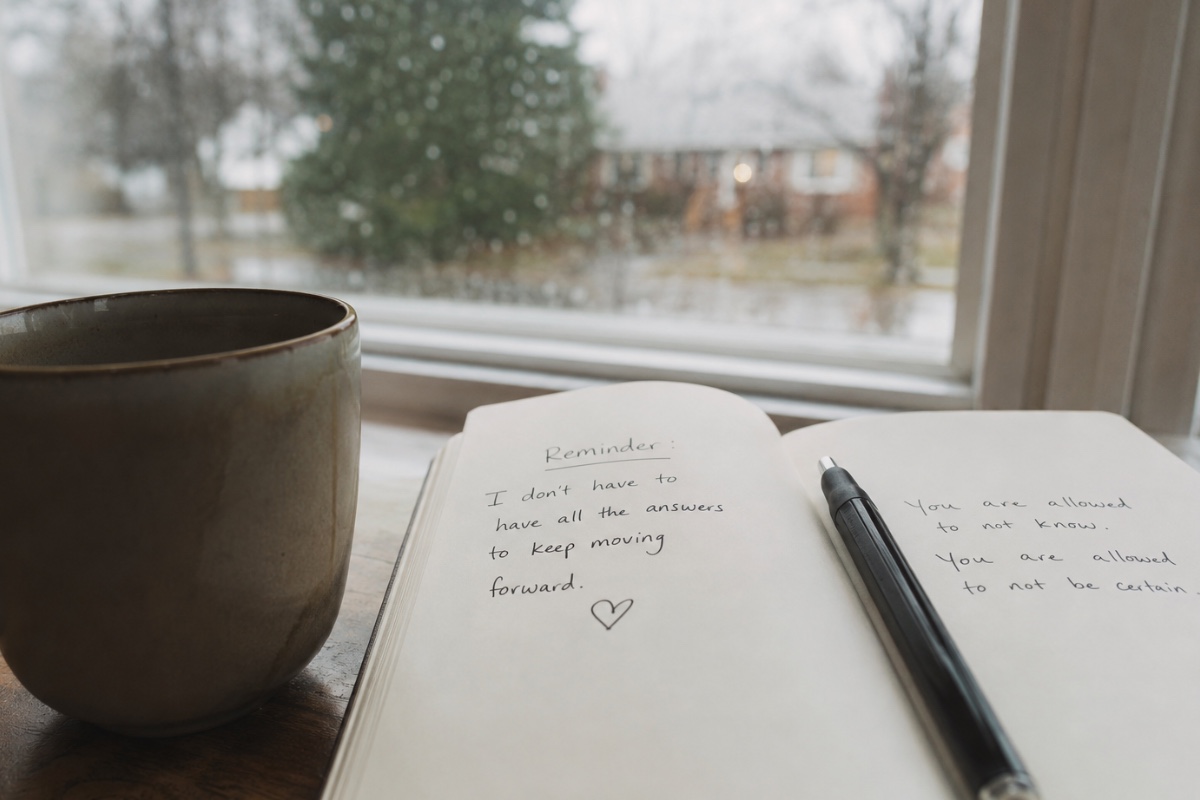
And I think this is one of the hardest things about OCD because your brain can make uncertainty feel like a problem that needs to be fixed. It can make you feel like you’re being irresponsible if you don’t keep looking for an answer. But you’re allowed to not know. You’re allowed to make a decision without feeling 100% sure annd allowed to notice that something feels important without automatically assuming that the feeling needs to be acted on.
If you’re someone who constantly finds yourself wondering, “But what if this time it’s different?”, I’d encourage you to get curious about what happens after that question.
Do you start analyzing?
Checking?
Researching?
Asking for reassurance?
Trying to work out how you really feel?
That pattern can tell you a lot more than whether the thought itself feels convincing. Because sometimes the goal isn’t to figure out whether the thought is OCD with absolute certainty. Sometimes the goal is to notice, “Ah, I’m doing the thing where I’m trying to get certainty again.” And then, little by little, practice putting down the rope.
You don't have to answer every question your brain asks. Sometimes you can leave the question unanswered and keep living your life.
If any part of this resonated and you're curious about therapy, you don't have to navigate it alone.